
Stop Interviewing. Start Scoping.
How to take the reins of your product leadership interview before it's too late

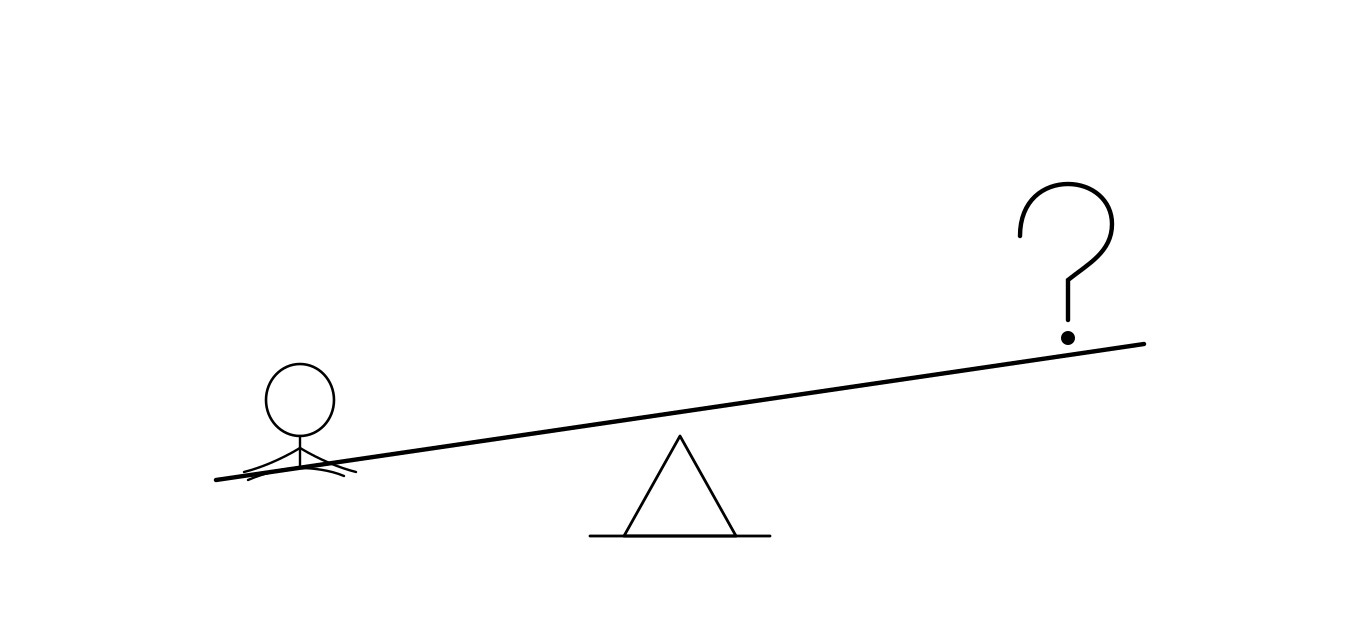
By now I've established the central thesis of this project: the challenges that create failure for product leaders are structural. I've also looked at the range of organizations out there, and the sobering likelihood of an early stage company actually succeeding. The bad news is that most of what determines whether a product leader succeeds is completely outside their control. The good news is that there is one moment where a product leader has complete and total control, and it is the most important one: the decision to accept the role. So if this is the only place where we have control, we have to do everything we can to ensure we are making an informed decision. In order to make an informed decision, we have to gather as much information about the role, the org, product and the people that we will be working with as we possibly can. We have to step into a position of confidence, and put on a very specific eyeball. Doing so has deep benefit to us, but also has deep benefit to the organization you are interviewing. This concept of developing the ability to gather the info you need to choose is the steel thread that will run through every subsequent post from here on out.
Most often, in early stage companies, the interview process is not often well organized, or well thought-out. This means that we are often at the mercy of processes that barely allow us to tell OUR story, let alone structure enough time for us to gather the info we need to make the right choice for ourselves. Furthermore, it’s very difficult to come in and demand a certain agenda, especially when you’ve been looking for a while, and the job hunt feels like a buyer’s market. We know that the job market has clearly shifted in terms of power dynamics over the last few years, that searches have lengthened, good roles are harder to find, but what remains true is that confident, deeply experienced talent is rare, and will always be valuable. You stepping forward and clearly stating “This is the information that I need. This process will allow me to understand if my strengths and my process are what your organization needs right now. This info gathering will also be very valuable to you, as a company.”
Taking the reins of an interview process projects a very powerful signal. It demonstrates a deep competence. It shows that you believe you are an equal in ideation and strategic thinking. It sets you up as someone who is ready and able to create value. It encapsulates the key idea that we need to feel about ourselves; You are interviewing them MORE than they are interviewing you. You must grab onto this idea with both hands and hold firm. Why? Because if you do so, all outcomes are positive.
The org doesn’t like it, and they reject you. If they don’t want you to be data-driven in your interview process, why would they want you to be data driven in your job. You dodged a bullet.
You gather enough information to tell you that the role and all its inherent challenges are not for you, and you walk away. You’re now open to a better fit. Well done.
At the end of all of your conversations, you feel you do want the job. You have now shown, rather than told that you are a competent leader, who has a clear idea of how you will do the job. You have gathered a ton of really valuable information that has allowed you to clearly line-up your role and the first few months of your focus. You’re better prepared to start. Your new org should feel great about offering you the job.
So often when we are interviewing, we have rose-coloured glasses on. We want the org to be all that we could wish. We want to be chosen. We want the job, and we also NEED the job. So we gloss over the funny coloured flags. We bend things that we should look at more closely into positives. We don’t ask more (or any) questions out of fear. We assume that the org must know what they are looking for. We assume that they also know what they need. Product people know that we can NEVER let assumptions ride. It’s our job to validate assumptions.
So if you are currently applying to product leadership roles at early stage companies, you want to embody the “Consultative” Mindset. Seven of my interview subjects explicitly called out that you need to take on the perspective of a Consultant when you are interviewing. Consultants have productized their expertise. They go in with a process and a structure and it allows them to extract the information that they need in order to create a plan. Consultants are hired because they have an eyeball, and expertise that the organization needs. This is how you need to think of yourself as you enter into an interview process.
I was a consultant at two very highly regarded software development agencies, Pivotal Labs and ThoughtWorks. Our clients came to us because they wanted something valuable, delivered quickly. That's exactly what early stage companies are looking for. (We’ll get into that in a lot more detail in later posts.) As consultants it was our job to collect as much information as possible that would allow us to smooth our path. We also wanted to make sure that we weren’t met with resistance along the way. Our rough process as we were scoping a project with a prospective client was as follows;
We asked all key stakeholders a lot of questions that allowed us to accurately scope the engagement
We listened acutely for information that would prevent us from being able to effectively deliver the value that we were promising
We clearly explained our process, how we work, what we need to be successful and what we would do first, second, third, etc.
It’s pretty straight forward. It’s a bit dicier when you’re interviewing for a full-time job, but I promise the juice is worth the squeeze.
Confidence and Clarity
As a consultant, we have the ability to dictate how our engagements go. A client could decide not to work with us, sure, but a big part of a consultant’s value is seeing a really great process in action. In a job interview, it’s a lot more difficult to rock up and say “This is how this is going to go.” It takes a lot of confidence to do so, but if you don’t have the confidence to ask for what you need in the interview process, you won’t have the confidence to be a product leader in an early stage company.
This is not meant to shame folks who feel trepidation about making asks during the interview process. This is an attempt to help people feel better about doing so, because not doing so has such dire consequences. The majority of people that I spoke to expressed regret at not asking more questions, not speaking to the right people, or not pursuing things that could have been amber/red flags. As the leaders I spoke to acquired more experiences, good and bad, they were able to more clearly see what information they needed to collect.
For every key challenge that was highlighted during my research, there were corresponding evaluative actions, and we will be digging into each of them in detail with specific questions you can adapt in subsequent posts. But before we get into the specifics, there is a more fundamental problem to address. The majority of the product leaders I spoke to never got far enough into the interview process to gather the information they needed, because the process itself was working against them. There are three ways this happens, and knowing how to recognize and respond to each of them is the foundation everything else builds on.
The interview is really just about “Vibes”
This was a really common scenario that the people I interviewed described leading into their worst experiences, and it happens all the time. An organization is attempting to make one of their most important hires, but they don’t actually ask anything of value. No true substantive questions are asked, nothing to do with the work or decisions is dug into at all. Many folks who go through a vibes interview initially take it as a good thing. After 10-12 step interview processes that take months to complete and end with rejection, a company that seems to know its mind and can make it up quickly looks really inviting. What my research told me clearly was that the vaguest interview processes stand in front of organizations that are often the most dysfunctional. Alicia Hurst talked at length about this flag, summing it up succinctly, “The shorter the time period, the more fucked up it is.” She went on to say, “What I’ve noticed is that there’s actually an inverse correlation between the ease of a startup interview and the more brainpower it zaps.”
I was guilty of being beguiled by a short and easy interview process recently. I had two 45-minute interviews with the Founder and the CEO. After the second one, I had an offer in hand. I hadn’t interviewed in quite a long time and was out of shape. I also knew and trusted the recruiter quite well, they had worked with the founder previously and gave me what felt like a full picture. In the end, what I found when I entered the organization was that the job I actually needed to do vs. what I was told the role would encompass were completely different. Other people described interviews where the CEO didn’t ask about product at all, preferring instead to focus on discussions around recruiting. One specific leader I spoke to said that the interview “felt more like a date,” “rather than him really wanting to know how I thought and how I worked, he seemed most concerned with whether he liked my personality.”
It’s not a bad thing to do a chemistry check with the people that you are going to work with, but if that’s all the interview is, and you don’t feel that you’ve had any kind of in-depth conversation about their view of the product function, and how they need product to work, then that’s a red flag. What emerged consistently was that upon joining organizations where the interviews had been short and surface-y, the role was ill-defined and most people had little to no understanding of what product's purpose was.
If you find yourself in a vibes-only process, you have two options. The first is to name it directly. At the end of any surface-level conversation, you can say: “I’d love to set up some time to walk you through how I think about the product function and what I’d need to be set up for success here. Would that be something you’d be open to?” You’re not demanding a new process. You’re proposing one, and framing it as valuable to them. The second option is to bring the substance yourself. If the CEO wants to talk chemistry, give them chemistry, but steer it. Ask them directly how they think about the product function, what their last product leader did well, what they’d want done differently. You can run a discovery session while they think they’re having a chat. We will be loading you up with a lot of specific questions to ask in coming posts.
You don’t get an opportunity to speak to your most important counterparts
The product function is the glue of an organization. Everything we create and build is implemented or dependent upon others in order to successfully roll out. The politics, dynamics and perspectives of key functions is going to tell you a huge amount about how the organization functions. We will be digging into this topic in-depth in later posts, but the things that made a job the most challenging for a product leader was friction with the heads of other functions. In a B2B company, you need to understand how the VP of Sales views product. Is product an order taker or a partner? In B2C, you need to understand the Head of Marketing approach to customer and product marketing. Every person in the organization holds a perspective on the org, the customer, the problem space, the market, process, ways of working, and the goals that the org is trying to accomplish. You can’t effectively understand the possible scope and the needs of a potential job, if you haven’t gathered info from your major stakeholders. Another key piece of data that you gather from speaking to different function heads, is how aligned they are. If you ask each of them about goals, do you get a different answer each time?
There are a lot of reasons why an organization might not set up interviews with key stakeholders, but every time there was a major omission it created a huge amount of friction for the product leader down the line. Sometimes it is because the role is empty, and in the process of being filled. Once, I was interviewed by an interim CPO, who had an incredibly clear idea of what she was interviewing for, and what she wanted the role to be. I was given the impression that the organization was clearly aligned around that role. Just as I was joining, the long-term full-time CPO came on board. Not only did he have a very different perspective on product, but the role that I had interviewed for was drastically changed.
Once you’ve spoken to the HR person or recruiter about the role and the organization, you should draw up a list of people that you’d like to interview with. When you submit your list of people you'd like to speak with, frame it as part of your process, not as a demand. Something like: "I find that speaking with the heads of engineering, sales and marketing gives me a much clearer picture of where product can have the most immediate impact. Could we build those conversations into the process?" If the org pushes back or goes quiet, that is data. An org that won't let you speak to the people your success depends on is showing you, before you've even started, how it treats the product function. If a key role is vacant, ask to speak to whoever is currently covering that function. If the interim CPO situation I described is a risk, ask directly: "Is there any change expected in the leadership structure in the next six months?" It's a direct question. How they answer it tells you a lot.
You are not given much or any time to ask questions or present
Across the board, in every interview that I conducted, there was a similar sentiment, “I should have asked more about that…I should have really dug into that…I needed to follow-up on that more.” No one, not a single person ever said that they regretted asking too many questions. But asking a lot of in-depth questions is difficult. Thinking about my most recent interview, there were five minutes left at the end of each conversation. This is where the need to be confident and clear about what you need comes in. In general, you want multiple opportunities to speak to the Founder/CEO, one so that they can ask you questions and one where you can ask yours.
Obviously the organization needs to collect a lot of info from you, and you want to be given an opportunity to clearly lay out your value, your experiences and your process. Being asked questions allows you to do that. The questions that you are asked should be used to explain what your process has been, but if you aren’t given opportunity to really investigate the org and its team, you’ll never have the opportunity to present what your process WILL be, and you want to be able to do that.
The most practical thing you can do is come to every conversation with your three most important questions written down and committed to, so that when the interviewer says "we have a few minutes left, do you have any questions?" you are not scrambling. But five minutes at the end of a conversation is not enough, and you should say so. Ask for a dedicated session where the agenda is yours. "In order to come in and hit the ground running, I need to understand the organization well enough to put together a clear picture of my first ninety days. Could we set up some time where I can ask the questions that would allow me to do that?" You are not asking for a favour. You are telling them exactly how you work, and giving them a preview of how you'll show up in the job. A leader who can clearly articulate what they need in order to build a plan is demonstrating the thing the org is supposed to be hiring for. If they're resistant to giving you that time, ask yourself why an organization making one of its most important hires wouldn't want their candidate to be well-informed before they start. The answer to that question is worth sitting with before you accept anything.
In the end, there is rarely a situation, especially in early stage companies, where having more information than less, hurts you. When I asked the people I interviewed if they had any regrets, the majority of them expressed a regret that they did not probe more, and learn more about…well everything. The above is the framing around your interview process, the permission you need to step forward as the leader that the organization is looking for. The evaluation roadmap that I’m going to set out will cover the founder/CEO, org culture, their view of product, your counterparts, and many more topics with specifics that you should dig into. This is the information that I wish someone had handed to me 10 years ago when I was interviewing for my first leadership position.